Mike and Rafo’s growing trust and friendship
Cry MachoMike and Rafo’s growing trust and friendship becomes the emotional center of their journey: a relationship that begins under an employer’s bargain gradually acquires the force of mutual care. Its course is neither smooth nor secure. The two reconcile through a small, unspoken gesture, share experiences that make separation painful, and then confront the fact that Mike first approached Rafo for money. At the border, Mike’s decision to draw the police after himself gives their bond its clearest proof, while Rafo’s hope that they remain a “we” survives the separation.
From Uneasy Companions to Reconciliation
Their relationship begins in an arrangement shaped by Howard’s job: Mike is to bring Rafo back, and the boy has reason to distrust the adult who has taken charge of him. By the time they reach Marta’s house, however, their connection has accumulated grievances and attachments that cannot be reduced to that original purpose. When Mike sees Rafo preparing to leave, the boy’s face is dark with resentment. Mike wonders whether Rafo suspects him of taking advantage of Marta, or sees Marta as no different from his own mother. But Rafo’s expression changes, and he points to the money he has left on the table.
The gesture resolves the immediate tension without an explanation or apology. Mike understands that Rafo has come to make amends for their quarrel in the street; he nods, and the boy grins. Their reconciliation is deliberately modest: they say little, but recognize one another’s gesture and accept it. They leave Marta’s house together and walk up the hill to Mike’s truck. When Rafo offers to scout the main street alone, reasoning that a solitary Mexican boy will attract less suspicion than the two of them together, Mike lets him go, though not without misgiving. Rafo’s independent judgment and Mike’s worry coexist: their bond makes room for the boy’s initiative without making the adult indifferent to his safety.
Shared Experience and the Wish to Stay
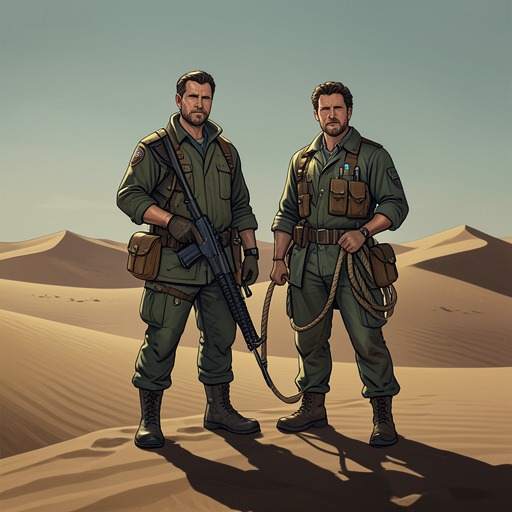
The time they spend together on the mesa gives their closeness a history beyond the rescue mission. Mike recalls that they shared the first night there, the first horse they captured, and the first fear that passed, as well as the fulfillment of hopes. These experiences make the landscape part of their relationship: Rafo stands alone against the sky for a last look at the mesa, while Mike approaches slowly because he wants to share the moment without intruding on the boy’s solitude.
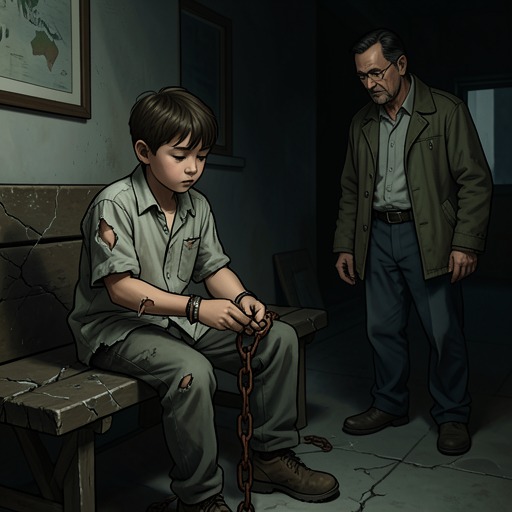
Rafo tells Mike, “I don’t want to leave Janasco, Mike.” He does not simply prefer the town; he asks to stay with Mike and promises that they can both be happy there. When Mike asks what he could do in a poor, isolated Mexican town where he cannot eat the food or speak the language, Rafo becomes desperate. He starts to cry, covering his mouth and trying to suppress the sobs. The effort exposes how much emotional strain he has been carrying beneath the pride and self-reliance he has learned to perform. He begs Mike to stay and asks why Mike cannot be his friend. Mike, overwhelmed by the boy’s tears, tells him to stop, but the plea continues. Their positions are painfully unequal: Rafo can offer his promise of shared happiness, but Mike cannot accept a future there.
The Rupture of the Original Bargain
The deepest break comes when Rafo learns the truth about Mike’s reason for taking him north. He concludes that his mother would never have paid a peso for him and interprets her having sent the police as another cruel joke. Then he asks whether his father ever rode a wild horse. Mike answers no, overturning the heroic image Rafo had held of his father. The boy’s questions connect two losses: the father he had idealized does not match his imagined figure, and Mike’s involvement began as paid work.
Rafo calls himself the sucker in the arrangement and sees Mike as a man hired by his father. Mike does not deny the transaction: he admits that it started that way. That admission matters because it neither erases the original deception nor reduces everything that has happened since to a lie. Rafo is left to hold both truths at once: Mike came for money, yet their shared journey has made Mike important to him. The knowledge reopens his hostility toward gringos and makes trust feel dangerous. Their bond is not secured by good intentions hidden from the beginning; it must survive the discovery that its beginning was compromised.
Choosing Care Under Threat
When Rafo says he will face the danger by himself, Mike feels a sharp pang and expects the relationship to end there. Instead, he offers to help him escape. His plan is to get onto a roof, reach Mike’s truck, and leave alone while Rafo stays concealed until the pursuers follow. The tactic divides them physically, but it is designed to protect the boy. Mike’s offer answers Rafo’s accusation not with a denial of the past but with a choice in the present.
Mike briefly imagines escaping by himself, free of responsibility, but turns away from that possibility because Rafo trusts him and has placed himself in Mike’s hands again. He recognizes that worrying about someone he loves is itself a relief, even when he believes he may never see Rafo again. The description marks a change in the relationship’s terms: responsibility is no longer only an obligation imposed by the job. Mike chooses it as care. He does not touch the patrol car; instead, he reaches his truck, discovers that the police have the key, opens the hood, and jumps the starter circuit. His escape becomes the means by which he draws danger away from Rafo.
Separation and the Meaning of “We”
After the gunshots stop, Rafo cannot know whether Mike has crossed into Texas or been killed. He remembers that the previous night’s revelation had sent him back into hatred of gringos, whom he regarded as liars and promise breakers. In the morning, Mike’s action changes what that judgment can mean: he has cried, “We’re going!”—not merely announcing his own escape, but making the two of them sound like a unit while drawing the gunfire toward himself. Rafo wishes the words were still true in the literal sense, but decides that, for him, they will remain true whether Mike is alive or dead.
The ending does not restore the pair to a shared life or resolve Rafo’s uncertainty. It leaves him separated from Mike, with no assurance that his friend survived, yet unable to return to the belief that all gringos are alike. Their friendship is defined not by a promise of permanent togetherness but by the acts that make trust possible: a nod over money left on a table, a shared history on the mesa, an honest admission of the job’s original motive, and finally a dangerous act of protection. Rafo’s sense that they will always be together preserves the bond inwardly even as the journey forces them apart.